
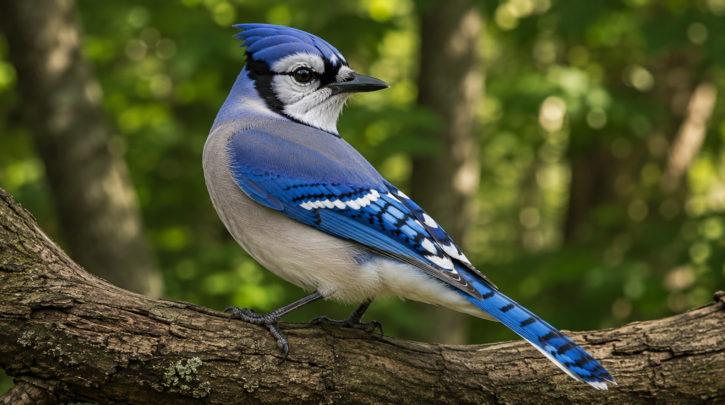

Blue Jays live noticeably longer than many similarly sized backyard birds, a pattern that lines up with a broader trend across corvids — the same intelligent family that includes crows and ravens — connecting bigger brains to longer lifespans.
Typical Lifespan
Average wild lifespan for Blue Jay is often cited around seven years, but banding records show individuals living considerably longer — confirmed records exist of Blue Jays living past seventeen years in the wild, with some sources citing even longer exceptional cases.
The First Year Is the Hard Part
As with most songbirds, a large share of jay mortality happens in the first year of life, driven by predation, starvation, and inexperience finding food and shelter. Birds that survive that first year have meaningfully better odds for every year after.
Intelligence and Longevity: A Broader Pattern
Across birds generally, researchers have documented a correlation between relative brain size and lifespan — species with proportionally larger brains, corvids prominent among them, tend to live longer than similarly sized birds with smaller brains. Blue Jay’s above-average lifespan for its body size fits this broader pattern, though the exact causal relationship between intelligence and longevity remains an active area of research rather than a fully settled question.
Why This Correlation Might Exist
One proposed explanation is that greater cognitive flexibility helps a bird navigate genuinely novel challenges — unfamiliar predators, changing food availability, unpredictable weather — more successfully than a less flexible species could, translating into better survival odds over a longer lifespan. This remains a hypothesis rather than a fully proven mechanism.
How This Compares Across Jay Species
Detailed banding data is more limited for some of the other species, but general patterns suggest broadly similar longevity across the jay family, consistent with their shared corvid ancestry and comparable body size.
What Increases Survival
- A reliable source of peanuts and nuts, particularly valuable in winter when natural food is scarce
- Retained mature trees supporting both nesting sites and natural food sources like acorns and pine seeds
- Reduced pesticide use, preserving the insect populations jays rely on during the breeding season
- Water access, particularly during hot, dry stretches
Want to support jays through the toughest stretch of the year? See our peanut and nut feeder guide for the food that matters most when natural options are scarce.
A Family Worth Watching Long-Term
Given how long individual jays can live, and how strongly they favor familiar territory, a backyard host may realistically be watching the same individual bird return year after year for well over a decade — a genuinely different relationship than hosting a shorter-lived or more transient species.
How Banding Studies Track Jay Survival
Much of what’s known about jay lifespan comes from bird-banding programs, where researchers fit a uniquely numbered leg band on young or adult birds and track recoveries or re-sightings over subsequent years. Because jays are largely resident and territory-faithful, banded individuals are often recaptured or re-observed close to their original banding location even many years later.
Comparing Jay Lifespan to other Backyard Birds
A typical adult lifespan well into the double digits, with some individuals confirmed past seventeen years, puts jays among the longer-lived species, consistent with the broader intelligence-longevity pattern documented across corvids generally.
A Lifespan Shaped by Territory Fidelity
Long-lived, territory-faithful jays often become a genuinely familiar backyard presence over many years, and the same general pair or family group returning to a property season after season is a realistic expectation rather than an unusual coincidence for this particular family.
A Reasonable Way to Think About This Family’s Longevity
Rather than treating a visiting jay as a series of different, unrelated individuals from year to year, it’s statistically reasonable to assume at least some continuity — the same bird, or its close relatives, returning to a familiar, well-provisioned territory across much of what could be a genuinely long lifespan.
Final Thoughts
Longevity this substantial, paired with the intelligence this family is known for, makes jays a genuinely rewarding long-term subject for anyone willing to pay attention across multiple years. A familiar jay returning to the same yard for a decade or more is one of the more quietly rewarding relationships backyard birding has to offer.