
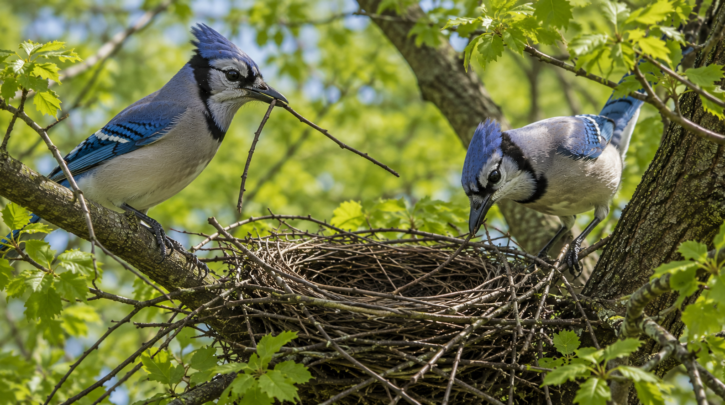

Spring looks different depending on which jay species you’re watching — Blue Jay is just getting started on nest construction while Canada Jay, having begun incubating back in the depths of winter, may already have chicks in the nest.
Blue Jay: Building Together
Spring is when Blue Jay pairs construct the open stick nest covered in our nest guide, with both members of a pair typically participating in gathering material and shaping the cup. Construction generally takes one to two weeks before egg laying begins.
A Quiet Return for Some Individuals
For hosts in regions affected by the individually variable migration pattern covered in our migration guide, spring may bring a modest increase in local activity as any migrating individuals return, though this effect is considerably less pronounced or predictable than a true seasonal migrant’s spring arrival.
Aggressive Defense Begins
Once eggs are laid, the aggressive nest defense covered in our nest guide becomes genuinely noticeable — loud alarm calls and direct diving passes at anything approaching the nest too closely, including cats, hawks, and people.
A Good Time to Keep a Respectful Distance
Spring is the season to be most mindful of an active jay nest specifically, since this is when defensive behavior peaks and a pair is most likely to react strongly to a perceived threat nearby.
Canada Jay: Already Well Underway
While Blue Jay is just beginning construction, Canada Jay’s remarkably early nesting season, covered in our migration guide, means this species may already have chicks by the time spring officially arrives — incubation started while temperatures were still well below freezing.
Steller’s Jay and California Scrub-Jay
These two western species follow a timeline broadly similar to Blue Jay’s, with spring nest construction and territory establishment following the same general pattern adapted to their respective coniferous forest and oak woodland habitats.
Pinyon Jay: Timing Tied to Cone Crop
Pinyon Jay’s nesting timing can shift depending on pinyon pine cone crop conditions from the previous fall, occasionally nesting earlier than expected in a particularly good cone year — a genuine departure from the more fixed calendar timing most songbirds follow.
Curious what comes next once eggs hatch? See our guide to baby blue jays and fledging for the extended apprenticeship that follows.
A Season of Genuine Contrast Within One Family
Few single seasons illustrate the internal diversity of this family as clearly as spring does — one species just starting construction, another already tending chicks, and a third adjusting its whole schedule around a specific tree’s seed crop from months earlier.
Regional Timing Differences
Exact spring timing for Blue Jay varies by latitude, with southern populations generally beginning nest construction earlier than northern populations, where a longer, colder winter delays the transition into active breeding behavior.
Weather Setbacks in Early Spring
A late cold snap can temporarily delay nest construction or egg laying, particularly for northern populations where spring weather remains genuinely variable from year to year.
A Reasonable Way to Watch This Season
Observing which behaviors show up first — construction, incubation, or in Canada Jay’s case, active chick-feeding — offers a genuinely useful window into just how differently five closely related species can time the exact same basic biological task.
A Season Worth Preparing For in Advance
Having feeders and nest sites already established before spring construction begins pays off faster than trying to attract a pair mid-season, since jays generally settle into a territory and commit to a nest site fairly quickly once conditions are favorable.
What to Watch For Each Week
Early spring brings territorial song and pair activity, followed within a week or two by visible construction, and finally the shift toward the quieter, more vigilant behavior that signals incubation has actually begun. Tracking these stages in sequence offers a genuinely clear picture of where a given pair stands at any point in the season.
A Reminder About Nest Disturbance
Given how aggressively jays defend an active nest, spring is a good season to observe from a comfortable distance rather than approaching closely, letting normal behavior unfold undisturbed rather than risking a defensive response that benefits no one involved in the encounter.
Final Thoughts
Spring sets the tone for the entire jay year, and understanding which behaviors to expect and when helps turn a season of loud, sometimes startling activity into something genuinely understandable rather than mysterious, unpredictable, or simply alarming for anyone at all to witness up close for the very first time in their own personal backyard for the very first time ever.