
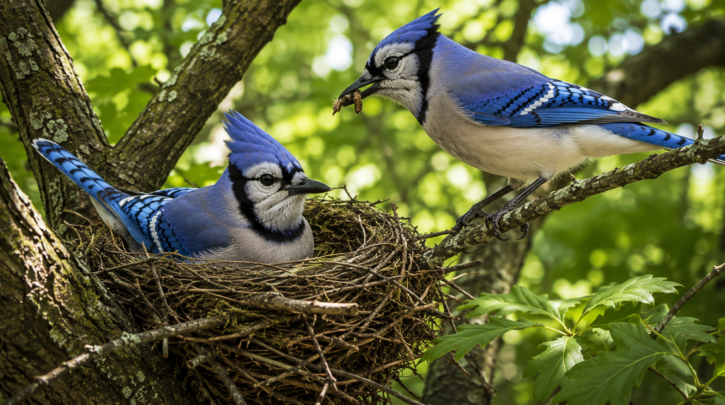

Despite how visually striking jays are as a family, sex is genuinely difficult to determine by looking — across all five common species, males and females share essentially the same plumage.
A Family Without Reliable Visual Dimorphism
Blue Jay, Steller’s Jay, California Scrub-Jay, Canada Jay, and Pinyon Jay all show the same pattern: no consistent, field-reliable difference in color or pattern between males and females. This puts jays in the same category as chickadees and Pine Siskin — genuinely monomorphic species where sex can’t be confidently determined from appearance alone.
Subtle Size Differences That Aren’t Reliable Field Marks
Some research suggests males average very slightly larger than females in certain jay populations, but the overlap between individuals is far too great to use size as a practical field mark without two birds directly side by side, and even then the difference is subtle enough to be genuinely unreliable.
Behavior Offers Better Clues Than Plumage
During the breeding season, a few behavioral patterns are more informative than appearance. Incubation is handled primarily by the female in most jay species, so a bird spending long, continuous stretches on the nest is more likely female. Males often take a larger role in feeding the incubating female and, later, in defending the nest site aggressively against intruders.
Vocal Behavior as a Clue
Some evidence suggests certain call types are used more frequently by one sex than the other in various jay species, though this research is less thorough and less conclusive than the well-studied sex-based calling differences documented in some other bird families.
How Researchers Actually Determine Sex
Because visual identification isn’t reliable, researchers studying wild jay populations typically rely on molecular sexing from a blood or feather sample, or on direct behavioral observation at an active nest, rather than any plumage-based method.
Why This Pattern Shows Up So Often in Backyard Birds
Monomorphism keeps appearing among the highly social, flock-oriented, or cooperatively behaved species — chickadees, Pine Siskin, and now jays — suggesting that species relying less on individual visual courtship display and more on year-round social structure may simply gain less evolutionary benefit from visually distinguishing the sexes.
A Practical Takeaway
Don’t spend time trying to sex an individual jay by looking at it. If you want to track a specific pair through a nesting attempt, watching incubation and feeding behavior is a considerably more productive approach than any visual comparison.
Curious what jays actually sound like, including their famous hawk mimicry? See our calls and mimicry guide.
A Trait Shared Across the Corvid Family
This lack of visual dimorphism extends beyond the five species covered on this site to corvids generally, including crows and ravens — suggesting the pattern may be a fairly deep, shared trait across the broader family rather than something that evolved independently in each individual jay species.
Field Practice: Watching Pairs Together
Rather than trying to sex a single bird in isolation, watching a confirmed pair together during the breeding season — noting which bird spends more time on the nest, and which spends more time defending territory or delivering food — offers a far more reliable path to sexing individuals than any visual inspection alone.
A Reminder Worth Repeating
Given how visually striking jays are otherwise, it’s easy to assume some subtle color difference between the sexes must exist if you just look closely enough. In practice, no such reliable difference has been documented across any of the five species covered on this site.
What This Means for Everyday Birdwatching
Not being able to sex an individual jay doesn’t meaningfully limit the experience of watching this family — identification, vocal mimicry, and the caching behavior covered elsewhere on this site all offer plenty to observe without needing to determine sex on any given visit, season after season.
Final Thoughts
Sex identification is one of the few genuine limits on how closely a jay can be studied by sight alone, but it’s a minor one given everything else this family offers a patient observer. Behavior, not plumage, is where the real story lies — watch a confirmed pair through a nesting attempt, and incubation and feeding patterns will tell you more than any amount of close visual inspection ever could.