
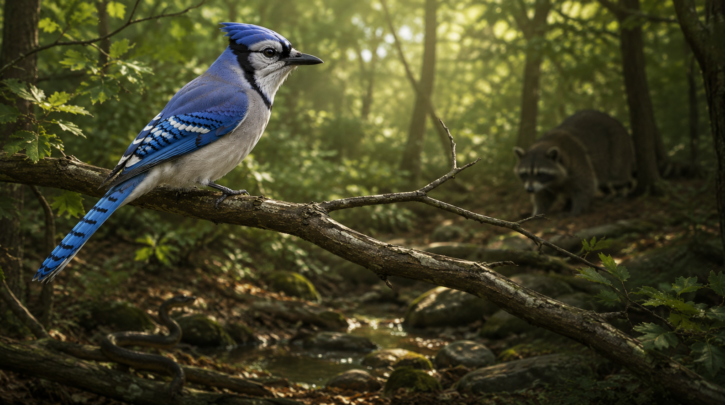

Few backyard birds carry as exaggerated a reputation as the Blue Jay when it comes to raiding other birds’ nests. The behavior is real — but decades of actual diet research show it’s a far smaller part of the picture than folklore suggests.
Where the Reputation Comes From
Blue Jays are loud, bold, visually striking, and unapologetic when they do take an egg or nestling — exactly the kind of behavior a human observer is likely to notice and remember vividly. A quieter predator, like a snake or a rat snake sliding into a nest at night, rarely gets witnessed directly at all, even though it may be responsible for considerably more actual nest losses.
What the Data Actually Shows
Historic stomach-content studies of Blue Jays, some dating back many decades, consistently find eggs and nestlings in only a small fraction of examined stomachs, with plant material making up roughly three-quarters of the diet across a full year. See our diet guide for the fuller picture.
A Classic Case of Confirmation Bias
Because a jay raiding a nest is a dramatic, visible, easily attributed event, it tends to stick in memory far more than the actual leading causes of songbird nest failure — snakes, squirrels, raccoons, and other mammals typically account for considerably more nest predation overall than jays do, even though they rarely get the same reputation.
Does This Mean It Never Happens?
No — individual Blue Jays do occasionally take eggs or nestlings opportunistically, and this is a genuine, documented behavior. The correction here isn’t that it never happens, but that it represents a small minority of the overall diet rather than a defining feature of the species.
Not Unique to Blue Jays
Occasional egg or nestling predation shows up in the diet of a number of other songbird species as well, making Blue Jay less of an outlier than its reputation implies once the behavior is considered across the wider bird world rather than treated as a uniquely jay-specific problem.
Why the Myth Persists
A vocal, visible, unmistakably distinctive bird makes an easy villain, and the sheer boldness Blue Jays show at feeders and around yards likely reinforces a general impression of aggressiveness that then gets applied, not entirely fairly, to nest predation specifically.
What This Means for Backyard Hosts
Hosting Blue Jays doesn’t mean actively endangering every other bird nesting nearby. If protecting a specific nest box feels like a priority, general predator deterrence — correctly sized entrance holes, predator guards, appropriate placement — addresses the far more significant risks from snakes and mammals more effectively than trying to exclude jays specifically.
Want to feed jays without worrying about smaller birds losing feeder access? See our jay-proof feeder guide for a practical way to balance both.
A More Accurate Reputation
Blue Jays are bold, loud, occasionally opportunistic, and genuinely intelligent — but the specific reputation for wholesale nest raiding says considerably more about which predators people happen to notice than about which predators actually pose the greatest threat to backyard nests.
How This Reputation Compares to Other Corvids
Crows and ravens face similar, sometimes exaggerated reputations for nest predation, suggesting this pattern extends beyond Blue Jay specifically to bold, visible, intelligent corvids as a group — species people notice and remember precisely because they’re large, loud, and unmistakable, rather than because they’re disproportionately dangerous to nesting songbirds.
What Actual Nest-Predation Research Looks Like
Researchers studying nest predation typically use methods like remote camera monitoring at active nests, which has repeatedly confirmed that mammalian predators and snakes account for the majority of documented predation events across most studied songbird populations, with avian predators including jays representing a comparatively smaller share of the total.
A Reasonable Way to Think About This
Rather than viewing a backyard jay as a threat to be managed, it’s more accurate to view one predator among several — and a considerably less significant one, on average, than the snakes and mammals actually responsible for most nest losses in a typical yard.
A Useful Broader Lesson
This particular myth is a good reminder that visibility and actual impact aren’t the same thing — the predator you can see and identify clearly isn’t necessarily the one doing the most damage, a pattern that likely applies well beyond just Blue Jays and backyard nest predation specifically, into how people generally assign blame for all kinds of hard-to-observe events happening quietly out of sight, well away from any human witness who might otherwise happen to notice at the time.