
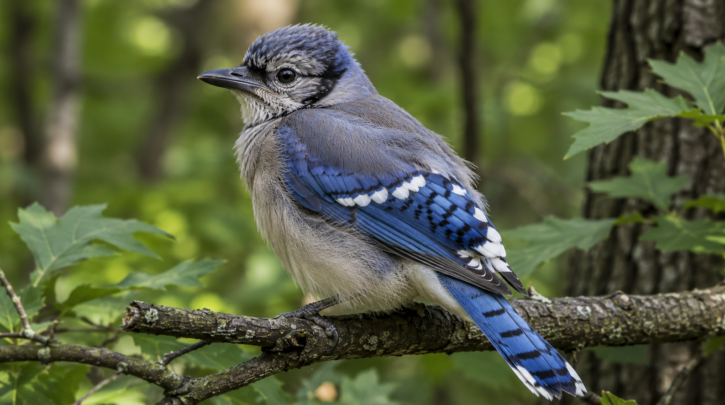

Young Blue Jays face a genuinely longer learning period than many other backyard birds — a pattern that likely connects directly to just how much cognitive development this intelligent family actually requires before true independence.
At Hatching
Newly hatched Blue Jays are altricial: blind, featherless, and completely dependent on their parents. Because the female incubates primarily on her own, as covered in our eggs guide, chicks typically hatch within a day or so of each other.
Feeding the Brood
Both parents feed the chicks, delivering insects heavily early on before gradually introducing more of the varied diet covered in our diet guide. Loud, persistent begging calls from the nest are often the clearest sign of an actively growing brood.
Nestling Period
Chicks typically fledge roughly 17 to 21 days after hatching, broadly comparable to many similarly sized songbirds, though what happens after fledging is where this species genuinely stands apart.
An Extended Apprenticeship After Fledging
Rather than becoming independent within a few weeks, young Blue Jays often remain with their parents for months, sometimes well into fall, gradually learning caching behavior, foraging technique, and the social vocal repertoire covered in our calls and mimicry guide.
Why This Extended Period Likely Exists
Across birds generally, species with more cognitively demanding adult behavior — complex caching and spatial memory, vocal mimicry, sophisticated social structure — tend to show longer developmental periods before true independence, and Blue Jay’s extended post-fledging apprenticeship fits this broader pattern connecting brain complexity to a longer road toward full competence.
Family Groups Through Fall
It’s genuinely common to see a family group of one or two adults with several young jays moving and foraging together well after fledging, a visible unit that gradually loosens as young birds become more independent heading into winter.
Comparing to the Family’s More Cooperative Relatives
Blue Jay’s extended family association after fledging is genuinely shorter and less structured than the multi-year helper arrangement covered in our cooperative breeding guide, but it still reflects a real developmental investment beyond simple fledging and immediate independence.
If You Find a Fledgling on the Ground
A young jay found on the ground or a low branch, not yet flying confidently, is usually not abandoned — this is a normal transitional stage, and a parent is very likely nearby, possibly reacting aggressively if approached too closely. As with most fledgling songbirds, leaving it alone unless it’s in clear, immediate danger is almost always the right approach.
Want to help a family group headed into fall? Revisit our attracting guide for the food and habitat that support an extended apprenticeship period like this one.
What Young Jays Are Actually Learning
Beyond basic foraging, young jays spend their extended apprenticeship picking up genuinely complex skills — efficient acorn caching, recognizing which cache sites are worth returning to, and the nuanced vocal repertoire covered in our calls and mimicry guide, including early attempts at the hawk mimicry adults perform confidently.
A Single Brood, Generally
Most Blue Jay pairs raise a single brood per season, focusing available energy on this extended post-fledging investment rather than attempting a second nesting effort the way some other species do.
A Genuinely Long Road to Full Independence
Between a three-week nestling period and a months-long apprenticeship afterward, the full journey from egg to a genuinely independent adult jay takes considerably longer than it does for many other backyard birds, a real reflection of how much this species’ adult behavior actually demands.
A Reasonable Way to Watch This Process
Noticing a family group still traveling together well into fall, with young birds visibly clumsier at foraging or caching than the accompanying adults, is a genuinely rewarding way to watch this extended developmental period play out in real time rather than assuming independence happens the moment a chick leaves the nest.
Distinguishing Young Jays From Adults
Juvenile Blue Jays generally resemble adults fairly closely in overall pattern, though slightly duller and less crisply marked, making behavior — clumsier flight, persistent following of an adult, obvious begging — a more reliable way to spot a young bird than plumage differences alone during this transitional period.
A Season Worth Watching Through to Its End
Rather than considering the story finished once chicks fledge, following a family group through the full extended apprenticeship — well into fall in many cases — offers a considerably fuller picture of just how much development this intelligent family actually requires before a young bird is genuinely ready to strike out entirely on its own.