
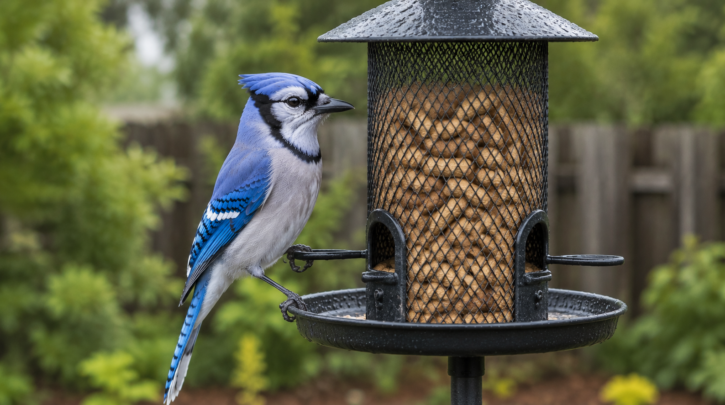

A peanut feeder is the single most effective purchase for attracting jays, but not every design actually holds up to a bird this large and this determined. See our full feeder setup guide for the design principles behind these picks.
What We Looked For
- Sturdy construction able to withstand a strong, forceful bill
- Genuine access to whole or shelled peanuts rather than tiny, restrictive ports
- Reasonable weight capacity for a bird considerably larger than a finch or chickadee
- Weather protection to keep peanuts from spoiling between visits
Duncraft Squirrel Buster Nut Feeder
Built specifically for peanuts, nuts, and fruit, with the same weight-activated Squirrel Buster mechanism used across Duncraft’s squirrel-resistant line. Because a jay weighs considerably less than a squirrel, the mechanism generally leaves jay access unaffected while still closing off unwanted squirrel visits. It also includes a built-in tail-prop area, originally designed with woodpeckers in mind but perfectly usable by a perching jay as well.
Duncraft Peanut & Sunflower Mesh Metal Selective Feeder
A metal mesh design holding both peanuts and sunflower seed, giving jays two of their strongest feeder preferences in a single unit. The metal construction holds up well to repeated forceful use in a way a lighter plastic feeder generally can’t match over multiple seasons.
Whole vs. Shelled Peanuts
Whole in-shell peanuts let a jay work through the shell the way it would with a wild acorn, while shelled peanuts offer faster, lower-effort access. Either works well; some hosts offer both in separate feeders to see which their local jays actually prefer.
Platform and Tray Options
A simple, sturdy platform or tray feeder loaded with peanuts, corn, and sunflower gives jays the open, stable perching space covered in our feeder guide, without needing any specialized mesh or caging at all.
Want to keep peanuts available to jays without letting them dominate the feeders meant for smaller birds? See our jay-proof feeder guide for a practical way to run both setups at once.
Feeder Placement for Peanuts
Position a peanut feeder with reasonably easy approach and departure paths, since jays generally prefer a clear line of sight before committing to land, consistent with the bold but genuinely cautious temperament covered throughout this site.
Capacity Considerations
Because jays are large birds with correspondingly larger appetites, and often visit in family groups, a feeder with meaningfully greater capacity reduces how often refilling is needed once local activity becomes regular and consistent.
Durability Over Time
A jay’s strong, forceful bill puts more wear on a feeder than a finch or chickadee ever would, making metal or metal-reinforced construction a genuinely worthwhile investment for anyone expecting regular jay traffic over multiple seasons.
A Simple Starting Setup
For a first-time host, a single sturdy peanut feeder, whether a weight-activated design or a simple mesh tube, covers most of what a jay actually wants without requiring investment in multiple specialized feeder types before knowing how much local activity to expect.
When to Expand the Setup
Once local jay activity is confirmed and consistent, adding a platform tray for corn and larger seed, or a second peanut feeder positioned elsewhere in the yard, rounds out a more complete setup once a genuine family group becomes a regular visitor.
A Note on Cost
Peanut feeders built for jays tend to cost somewhat more than a basic finch or chickadee feeder given the sturdier construction required, but the durability difference generally pays for itself over several seasons of regular use by a genuinely forceful bird.
A Final Word on Choosing Between Designs
Whether a weight-activated squirrel-resistant model, a simple metal mesh feeder, or a plain sturdy platform actually performs best comes down largely to how much squirrel pressure a given yard faces — all three genuinely satisfy jays equally well once squirrels are accounted for or simply aren’t a significant local concern in a given yard or region.
Final Thoughts
A sturdy peanut feeder is the single highest-leverage purchase for attracting jays — everything else in this guide is secondary to getting that one piece of equipment right first. Whether you choose a weight-activated squirrel-resistant model, a simple metal mesh feeder, or a plain sturdy platform depends mostly on how much squirrel pressure your yard faces; all three satisfy jays equally well once that’s accounted for.
Add capacity or a second feeder later, once local activity actually justifies it. Consistency matters more than any particular brand or design detail — keep it filled, keep it clean, and jays will keep coming back.