
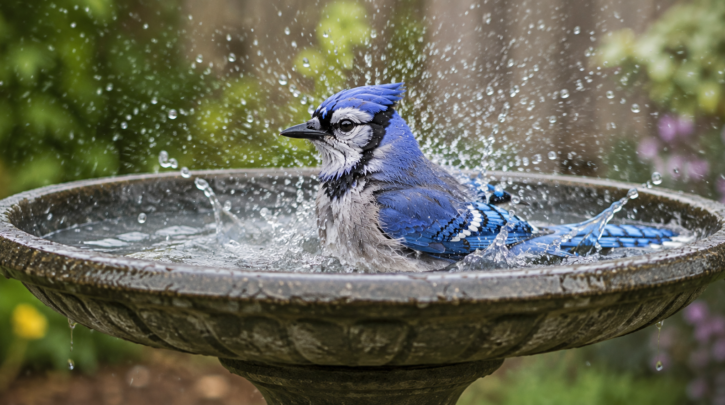

Jays are genuinely enthusiastic bathers, but a birdbath sized and built for a finch or chickadee often doesn’t hold up well to a bird this large and this energetic in the water.
What We Looked For
- A wider, deeper basin than a typical songbird birdbath
- Sturdy, stable construction able to handle vigorous splashing without tipping
- Reasonable depth — deep enough for genuine bathing, shallow enough to stay safe for smaller visitors sharing the same water
- Durable material that holds up to repeated heavy use
Duncraft Pedestal Bird Baths
A raised pedestal design gives a stable, elevated basin with good visibility and a reduced risk of ground-level predator ambush, while offering enough basin width and depth to comfortably accommodate a bathing jay without the bath tipping or draining too quickly from vigorous splashing.
Deck-Mounted and Ground Bird Baths
For yards without a good spot for a full pedestal bath, a deck-mounted or ground-level basin offers a lower-commitment alternative, though a ground bath specifically should be positioned with some clear surrounding sightlines given the added predator exposure of bathing at ground level.
Heated Baths for Winter
In regions where jays remain resident through freezing winter weather, a heated birdbath keeps water genuinely accessible during exactly the stretch of the year when natural water sources are hardest to find, extending the value of a birdbath well beyond the warmer months alone.
Placement Tips
- Position within reach of nearby cover, giving bathing birds a quick escape route while genuinely wet and less able to fly effectively
- Keep water shallow enough near the edges for smaller birds sharing the same bath, even while the center accommodates a larger bathing jay
- Clean and refresh water regularly to prevent algae buildup and reduce disease transmission risk at a shared water source
Pair a birdbath with the right feeder setup for a truly complete yard — see our peanut and nut feeder guide to round things out.
Why Water Matters Beyond Bathing
Beyond bathing itself, a reliable water source supports drinking needs year-round, particularly valuable during hot, dry summer stretches or frozen winter conditions when natural water can be genuinely difficult for any backyard bird to find.
Watching Bathing Behavior Up Close
Jays bathing vigorously, wings splayed and water flying, is a genuinely entertaining thing to watch from a reasonable distance, and a well-placed birdbath often becomes one of the more reliably active spots in an entire yard once local jays discover it.
Material Considerations
Concrete and heavy resin basins generally hold up better to vigorous jay bathing than lightweight plastic alternatives, which can tip or shift under the force of a large bird splashing energetically rather than simply sipping at the edge.
A Feature Worth Adding Even to an Established Yard
For a yard already running a peanut feeder and some nut-producing trees, adding a sturdy birdbath is often the single most impactful next step, rounding out food, water, and shelter into a genuinely complete setup for this species.
Sizing a Bath Correctly
A basin at least a couple of inches deep at its center, with a gradually sloping edge rather than a single uniform depth throughout, accommodates both a fully immersed jay and a smaller bird preferring shallower water near the rim.
Seasonal Maintenance
Draining and cleaning a birdbath before winter, and either removing it or switching to a heated model in freezing climates, keeps the investment useful year-round rather than sitting unused for several months at a time.
A Genuinely Worthwhile Addition
Given how enthusiastically jays actually use a birdbath once one is available, this remains one of the more consistently rewarding additions a host can make, delivering visible activity almost immediately rather than requiring the longer wait some other habitat improvements genuinely involve.
Final Thoughts
A sturdy birdbath is one of the fastest ways to see visible results in a yard already set up with a good peanut feeder. Jays bathe enthusiastically once they find reliable water, and a deep, stable basin — pedestal or ground-level, heated through winter if your region needs it — rounds out food, water, and shelter into a genuinely complete setup.
Prioritize it alongside the feeders rather than as an afterthought: a yard offering all three consistently draws more activity than one relying on feeders alone. It’s a modest investment that pays off in exactly the kind of close-up, splashing activity that makes hosting jays worthwhile in the first place.