
 Written by: Justin Roberts
Posted on: July 4, 2026
Best Binoculars for Watching Blue Jays: A Q&A Guide
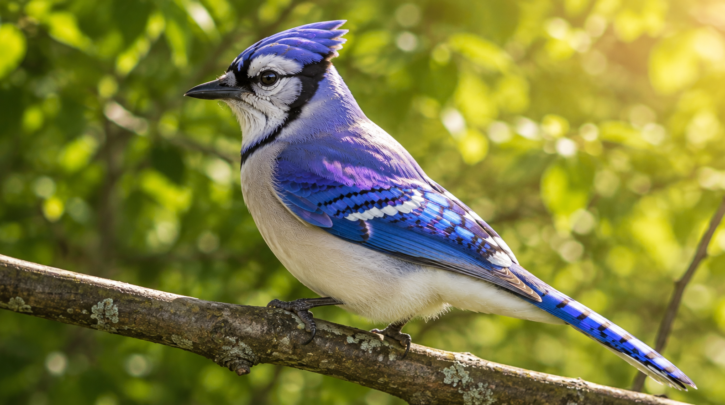
You don’t need binoculars to know a Blue Jay is in your yard. It’s loud before it lands, it’s bigger than almost everything else at the feeder, and its blue-white-black pattern isn’t subtle. So the usual binocular pitch — “get closer to birds you can…
 Written by: Justin Roberts
Posted on: July 4, 2026
Blue Jays in Spring: Nest Building and Aggressive Defense
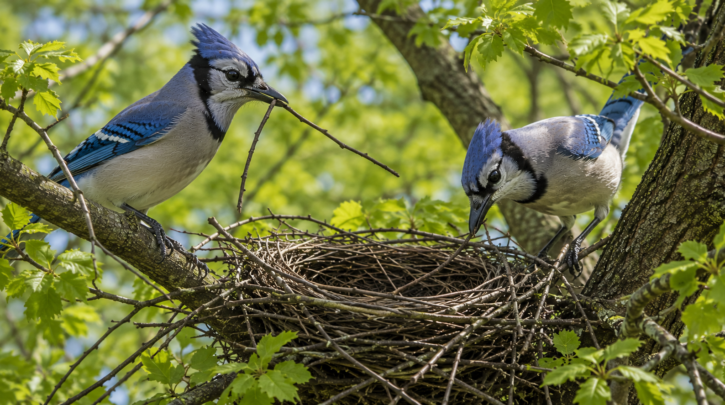
Spring looks different depending on which jay species you’re watching — Blue Jay is just getting started on nest construction while Canada Jay, having begun incubating back in the depths of winter, may already have chicks in the nest. Blue Jay: Building Together Spring is…
 Written by: Justin Roberts
Posted on: July 4, 2026
Blue Jays in Summer: Feeding a Brood and the Start of an Apprenticeship
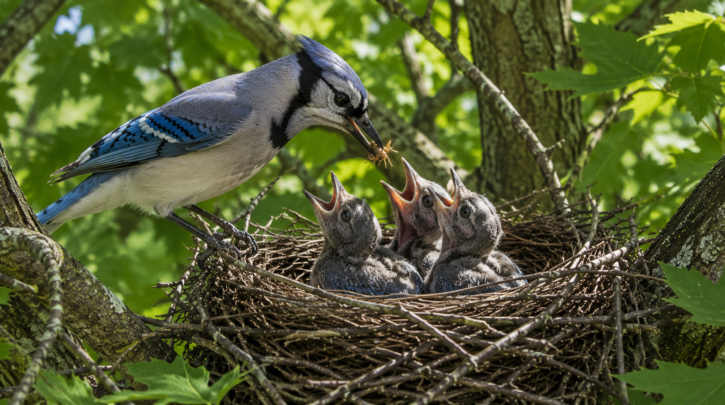
Summer covers the full arc of a typical Blue Jay nesting attempt — incubation, an insect-heavy feeding push, fledging, and the start of a genuinely extended apprenticeship that continues well past the point most backyard birds achieve independence. This site participates in affiliate programs. If…
 Written by: Justin Roberts
Posted on: July 4, 2026
Blue Jays in Fall: Peak Acorn Season
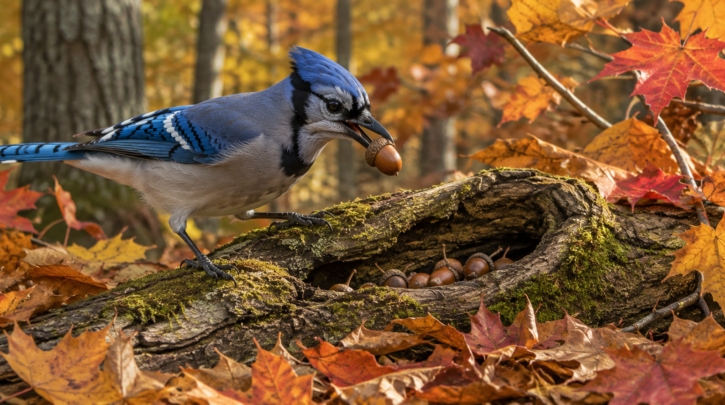
Fall is the single most ecologically significant season of the Blue Jay year — this is when the acorn-caching behavior covered in our oak forest guide actually happens, at a scale that genuinely shapes forest composition over the long run. This site participates in affiliate…
 Written by: Justin Roberts
Posted on: July 4, 2026
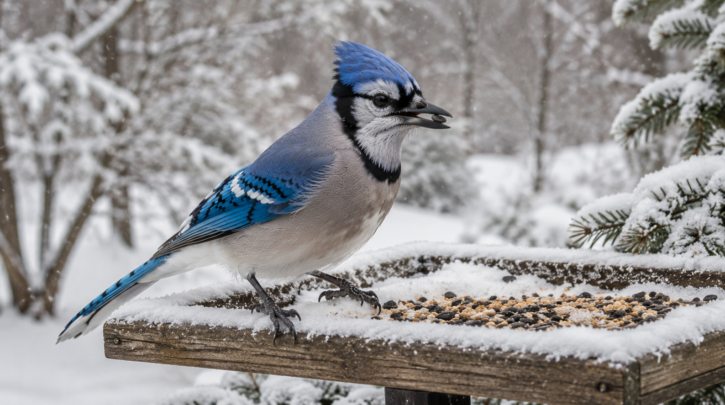
Blue Jays in Winter: Cached Food and an Early Start for Canada Jay
Winter is largely a resident season for most jay species, supported directly by the fall caching effort covered in our fall guide — and, for Canada Jay specifically, winter is when next year’s breeding season effectively already begins. Drawing on Fall Caches Cached acorns and…